
Dyes vs. pigments in cosmetics: What's the difference and why does it matter?
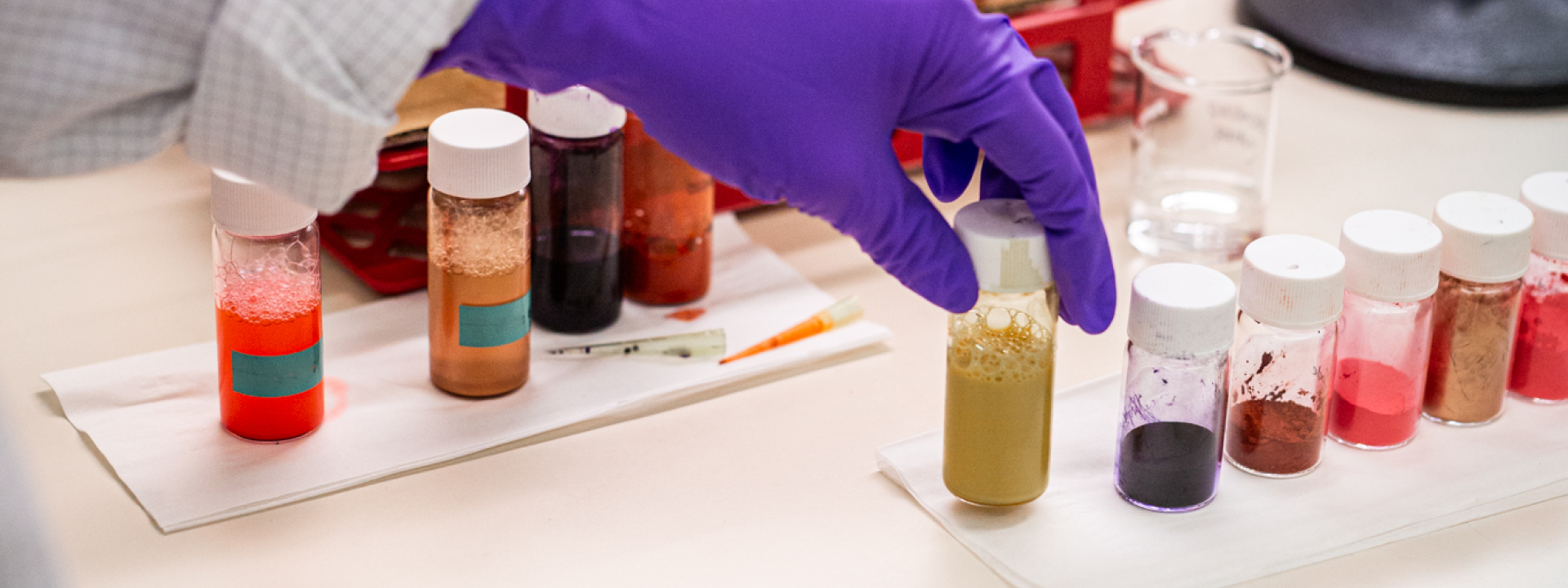
When you reach for your favorite lipstick or eyeshadow, you're probably thinking about the perfect shade, not the chemistry behind it.
But the world of color in cosmetics is genuinely fascinating, and understanding the difference between dyes and pigments can offer insight into not only how your products work, but also their environmental impact.
Let's break it down: dyes and pigments are both colorants, but they behave very differently once they meet your skin. The key difference comes down to something almost embarrassingly simple, size. Dyes are small, soluble molecules. Pigments are larger, insoluble particles. That one distinction cascades into everything else: how long the color lasts, how it looks, how it interacts with your body, and how eco-friendly the product ends up being.
What are dyes in cosmetics?
Dyes dissolve completely into the water, oil, or alcohol base of a formula rather than sitting on top of it. On skin or hair, they don't just sit on the surface, they penetrate the structure, working their way in and chemically staining proteins like keratin. That's exactly why dyes are the go-to for products like liquid foundations, lip stains, and hair colorants: dissolved molecules give a smooth, translucent, vivid result that particles simply can't match.
That same solubility is a double-edged sword, though. Because dye molecules are small enough to get in, some have been shown to penetrate skin and enter the bloodstream after repeated exposure. Most of the dyes once flagged for genuinely biotoxic behavior have since been prohibited, so this is largely a solved problem for what's currently on shelves, but it's part of why colorant safety testing exists in the first place, and why a handful of dyes still used in permanent hair color (kept around because nothing else matches their performance) are also known to be more allergenic than the average ingredient.
There's an interesting irony in the chemistry, too. Synthetic dyes are often engineered with very stable, complex molecular structures, which is great for resisting fading, but not so great once the dye washes down the drain. That same stability makes them resistant to natural breakdown, so highly soluble dyes that escape into wastewater can persist for a long time, block sunlight from reaching aquatic plants, and are genuinely difficult and expensive to filter back out. It's a trade-off between "stays vivid on you" and "doesn't stay around in the water system," and it's a big part of why the industry is pushing toward alternatives. Plant-derived dyes exist and sidestep the petrochemical sourcing issue, but they currently struggle with the exact same stability problem in reverse as they fade faster under light and heat.
What are pigments in cosmetics?
Pigments play an entirely different game. They're particles, not molecules, and they're simply too large to penetrate skin, which is a meaningfully different safety profile than a molecule designed to dissolve and diffuse. Instead of dissolving, pigment particles stay suspended in the formula, scattering and reflecting light rather than staining anything. That's what gives pigments their opaque, high-coverage look, and it's why they dominate in eyeshadows, powders, and pressed products where camouflage and long wear matter.
Because pigments don't chemically bond with a surface the way a dye stains a protein, they typically need a bit of help sticking around, usually a synthetic film-former added to the formula to keep the particles adhered to skin through the day. (This is one of the areas where formulation technology genuinely matters: more on that below.)
The particle structure also happens to be more chemically robust than a dissolved dye molecule, which is why pigments generally hold up noticeably better against fading from light and heat exposure over time. Good news if you want a shade that still looks the way it did when you bought it.
Pigments aren't automatically the "clean" choice, to be fair. Natural pigments still have to be mined, and mining metal oxides and similar minerals can cause real environmental degradation if it's not done responsibly. Synthetic pigments, meanwhile, are often derived from petrochemicals just like synthetic dyes, and can generate their own hazardous, hard-to-break-down byproducts. And while intentionally adding heavy metals to cosmetics is banned outright, trace residues can sometimes remain from raw materials, though at levels far too low to cause harm. The honest takeaway is that neither dyes nor pigments get a free pass on sustainability; the difference is in where the impact shows up and how manageable it is.
How they're regulated
Both dyes and pigments used in cosmetics are strictly regulated to protect consumers, but getting there is more complicated than it might seem. Major markets — the EU, the US, and Japan among them — each maintain their own "positive lists": a colorant has to be explicitly named and approved before it can legally go into a product. The catch is that the chemical names, definitions, and classification systems for the same colorant can differ meaningfully between regions, which creates real friction for anyone formulating for a global market.
In the EU specifically, colorants are listed in Annex IV of the EU Cosmetics Regulation, and only substances that have passed rigorous safety testing make the cut. One area still catching up is oxidative hair dye precursors, which historically sat outside the standard cosmetic colorant lists entirely. Regulation there is tightening quickly, and the EU is actively working on a dedicated, standalone positive list just for oxidative hair dyes.
Choosing color with your eyes open
None of this is meant to make you nervous about your makeup bag, as today's approved colorants, dye or pigment, have already cleared real safety hurdles. But the choice between dyes and pigments genuinely shapes how a product performs and what it leaves behind, from the particle size that keeps pigments off your bloodstream to the molecular stability that keeps dyes vivid, and, less conveniently, persistent in wastewater. Understanding that trade-off is what lets you (or your formulation team) make color choices that hold up under real scrutiny, not just under studio lighting.
Engineered for performance, sustainable by design
This is exactly the trade-off Vividye's technology is built around. We enable the exchange of toxic and unsustainable dyes for pigments that are safer for humans and the planet, without asking anyone to compromise on color performance.
A big piece of that is solving the film-former problem mentioned above: our direct surface adhesion technology lets pigment particles adhere to skin on their own, eliminating the need for synthetic film-formers or traditional microplastic binders. On top of that, our pigments deliver higher color intensity, which means less pigment is needed to hit the same shade, reducing both the environmental footprint and the operational cost of a formula, without touching how vivid it looks.