
New EU regulations: What you need to know about the microplastics ban
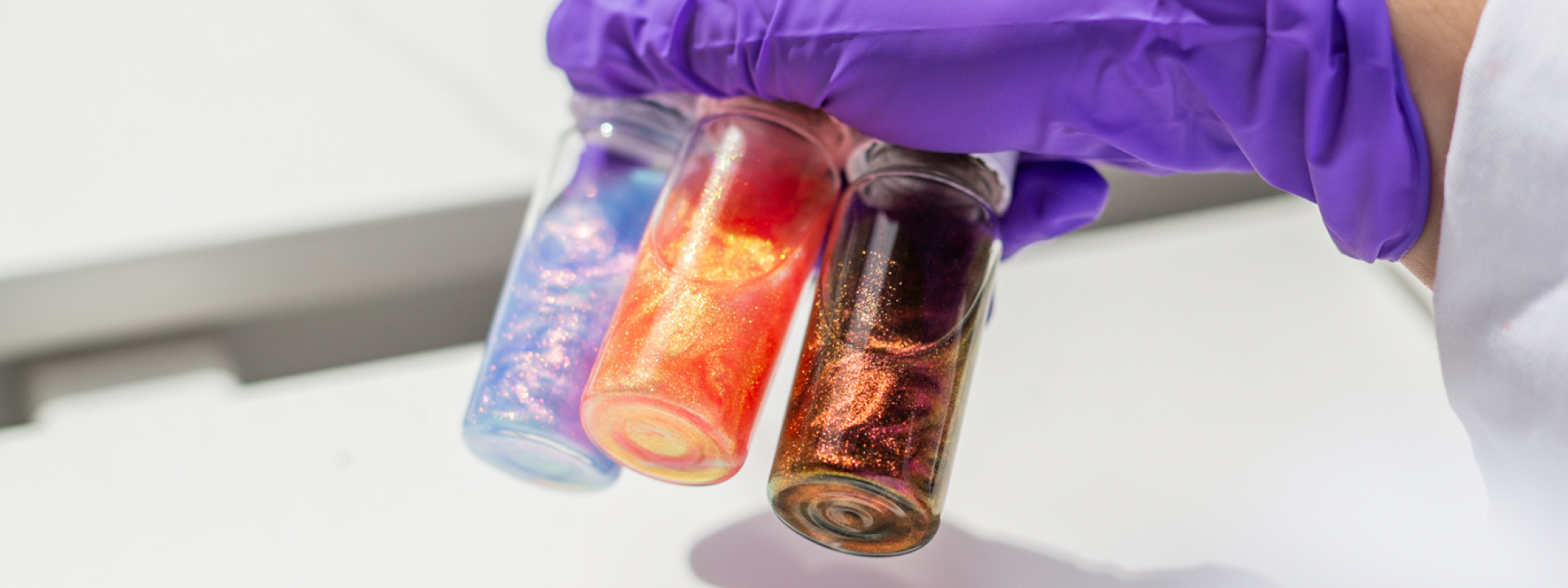
If your formulation or regulatory team has seen headlines about the EU "banning microplastics in cosmetics" and started bracing for a scramble to reformulate half the portfolio, take a breath. That's not quite what's happening. The regulation is real and already in motion, and it will reshape how film formers are used in cosmetic formulations over the next decade. But the details matter, and for anyone responsible for compliance or product development, they're more nuanced — and more workable — than the headlines suggest.
What actually counts as a microplastic?
Here's the part that gets lost in translation: the EU isn't banning synthetic polymers in general. It's targeting a specific physical form. Solid, insoluble, non-biodegradable synthetic polymer particles smaller than 5mm, present above a small concentration threshold. In other words, this is a rule about particles, not about chemistry in the abstract.
That distinction changes everything for how film formers are treated. Most film formers used in makeup and skincare today are added as liquids, or dissolve completely into the formula during manufacturing. Because they're never solid, undissolved particles in the finished product, they fall outside the restriction entirely. The actual target is narrower: a synthetic film former added as a solid powder or a tiny, undissolved micro-bead is what officially counts as a microplastic under the law.
The solid matrix exemption
So what about products that clearly do rely on a solid plastic film, such as nail polish, or a heavy-duty hairspray that dries into a hard, continuous layer on your hair? The regulation has a specific carve-out for this. If the polymer particles fully merge and lock into a permanent solid film during use, rather than staying loose or washing off, they're exempt from the immediate sales ban, because they're not the ones ending up in wastewater.
That exemption isn't unconditional, though. In exchange, companies using these ingredients take on real transparency obligations: they have to report how much of the polymer they use to environmental authorities every year, and the product's packaging has to carry clear disposal instructions.
The compliance timeline
The restriction phases in category by category rather than all at once, which is part of why it's easy to misread as one big ban hitting everything on the same day. So far, and going forward:
2023: Exfoliating microbeads in rinse-off scrubs, and loose plastic glitter, were among the first materials restricted. Glitter made from biodegradable, soluble, natural, or inorganic materials (glass or certain minerals, for example) was never in scope and remains completely fine to sell, the restriction only ever applied to the non-biodegradable, insoluble plastic kind. Some glitter uses covered by separate transitional provisions in the regulation get a longer runway before their deadline lands.
2027: Rinse-off products: shampoo, conditioner, and temporary, semi-permanent, and permanent hair coloring.
2029: Leave-on products: creams, lotions, and root touch-up or spray products (encapsulated fragrances land in this same window).
2031: A mandatory labelling requirement begins for make-up, lip, and nail products still using restricted microplastics: they must carry the statement "This product contains microplastics."
2035: Make-up: mascara, foundation, lipstick, and nail polish reach their full restriction deadline.
Why not just swap in natural film formers?
It's a fair question. If solid synthetic film formers are being phased out, why not just replace them with starches, plant gums, or cellulose? In practice, that swap runs into three real formulation problems.
The first is water resistance. Synthetic polymers are engineered specifically to repel water, which is what keeps eyeliner and mascara smudge-proof. Most natural plant polymers do the opposite, they love water, so a formula built around a basic natural gum tends to start dissolving the moment you sweat or get caught in the rain.
The second is microbial stability. Synthetic plastics are inert; there's nothing there for anything to eat. Natural ingredients, by contrast, are largely organic sugars and proteins, an appealing target for bacteria and fungi. Shifting to natural film formers generally means formulas spoil faster, which pushes labs toward much more aggressive preservative systems just to keep mold at bay.
The third is consistency. A synthetic polymer behaves identically batch after batch. A plant crop doesn't. A harvest after a wet summer can have a noticeably different texture, color, and chemical profile than one grown through drought, which makes it genuinely hard for brands to keep a natural-film-former formula performing the same way twice.
Vividye's solution
This is exactly the problem our technology sidesteps rather than solves the hard way. By securely attaching pigment directly to the surface, hair, skin, nails, or lashes, the pigment simply doesn't need a film former to stay in place. That means the underlying question of "which film former should we use instead" never has to come up: not a legally compliant synthetic one, not a natural one with its own trade-offs. The need for a film former is eliminated entirely.